Regulatory Framework for Flexible Food Packaging in Ukraine and Worldwide: Trends, Changes and Updates
05.11.2026
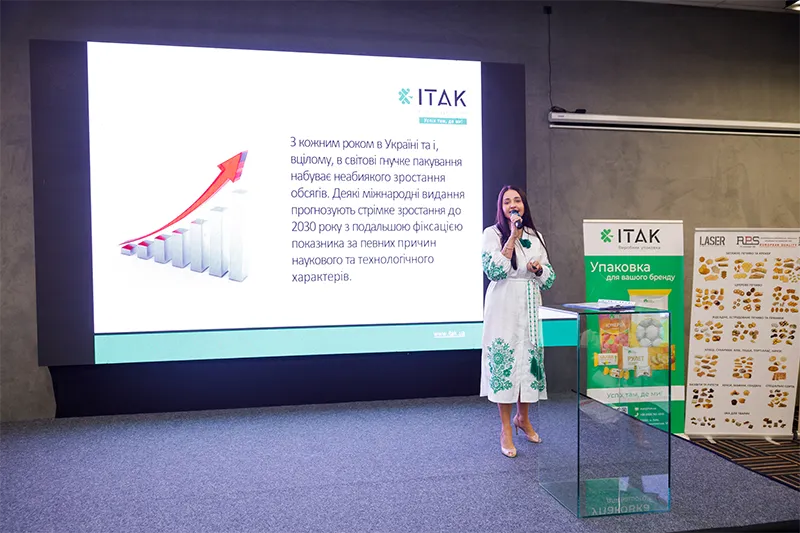
Every year, the flexible packaging market continues to grow significantly both in Ukraine and worldwide. Some international publications forecast rapid growth through 2030, followed by a possible stabilization of the market due to certain scientific and technological factors.
Advantages of flexible packaging:
- Requires less material, energy and water to manufacture.
- Extends product shelf life thanks to the barrier properties of the packaging material.
- Offers convenient and practical opening and closing systems.
- Provides a more attractive appearance on retail shelves.
- Reduces storage and transportation costs due to its lower volume and weight.
Interest in and demand for more environmentally friendly materials and their combinations are steadily increasing. This also requires taking regulatory changes in this area into account, with a focus on reducing waste, increasing the proportion of recyclable materials and monitoring these processes.
Legislation and Regulatory Framework for the Manufacture and Use of Flexible Packaging in Ukraine and Worldwide
What regulatory acts govern the flexible packaging sector?
First, two separate regulatory frameworks need to be distinguished:
- International legislation;
- Ukrainian legislation.
International legislation that every responsible food packaging manufacturer takes into account and complies with in its operations
- Commission Regulation (EC) No 10/2011 (including the latest amendments, Commission Regulation (EU) 2026/245 of 03.02.2026 – Commission Regulation (EU) No 10/2011).
- Regulation (EC) No 1935/2004 (Document 02004R1935-20210327).
- Commission Regulation (EC) No 2023/2006 (including the latest amendments, Commission Regulation (EU) 2025/351 of 24.02.2025).
- Regulation (EU) No 1169/2011 (Document 02011R1169-2025040).
- Regulation (EU) 2025/40.
These documents are subject to regular amendments. All stakeholders must monitor and take these changes into account to ensure full compliance with the applicable requirements.
Regulation (EU) 2025/40 on Packaging and Packaging Waste
The Regulation establishes requirements covering the entire life cycle of packaging in terms of environmental sustainability and labelling in order to place packaging on the market.
The Regulation sets out requirements for:
- Extended producer responsibility and the prevention of packaging waste generation, including reducing unnecessary packaging;
- Packaging reuse, as well as collection and recycling;
- Packaging recycling and the processing of packaging waste.
The Regulation establishes targets not only for packaging manufacturers but also for EU Member States. Each Member State must reduce the amount of packaging waste generated per capita (compared with 2018 levels) by at least 5% by 2030, 10% by 2035 and 15% by 2040.
What is PPWR?
For manufacturers, importers and exporters of products, this means that packaging compliance must be supported not only by manufacturers’ declarations but also by laboratory test results, technical documentation and other evidence of conformity.
PPWR (Packaging and Packaging Waste Regulation) is a new European Union regulation that replaces Directive 94/62/EC on packaging and packaging waste.
The main objectives of the Regulation are to:
- Reduce the amount of packaging waste;
- Increase packaging recycling rates;
- Reduce the use of virgin raw materials;
- Increase the proportion of recycled materials;
- Restrict the use of hazardous substances;
- Implement the principles of the circular economy.
The Regulation applies to virtually all types of packaging, regardless of the material from which they are made.
PPWR requires manufacturers to have sufficient evidence demonstrating that their packaging complies with the established requirements..
For this reason, laboratory test reports are one of the key elements of technical documentation. Such tests are commissioned by the packaging manufacturer or the manufacturer of the finished product. Based on the test results, the necessary documentation is prepared and compliance assurances are established.
The main types of testing, the results of which must be included in the documentation and supported by laboratory evidence (the Declaration of Conformity must contain all information about the test reports), include:.
- Determination of heavy metal content.
- Testing for PFAS content.
- Migration testing.
- Mechanical testing.
Additional testing areas have also been identified (however, methodologies and assessment procedures have not yet been approved; their introduction is possible by 2030):.
- Recyclability testing.
- Determination of recycled material content.
- Compostability testing.
Timely completion of the required tests and proper preparation of documentation will help exporters avoid delays when entering the European market, reduce the risk of claims from business partners and ensure compliance with the requirements of the new European legislation.
Nataliia Bevza
Quality and Certification Director, ITAK LLC